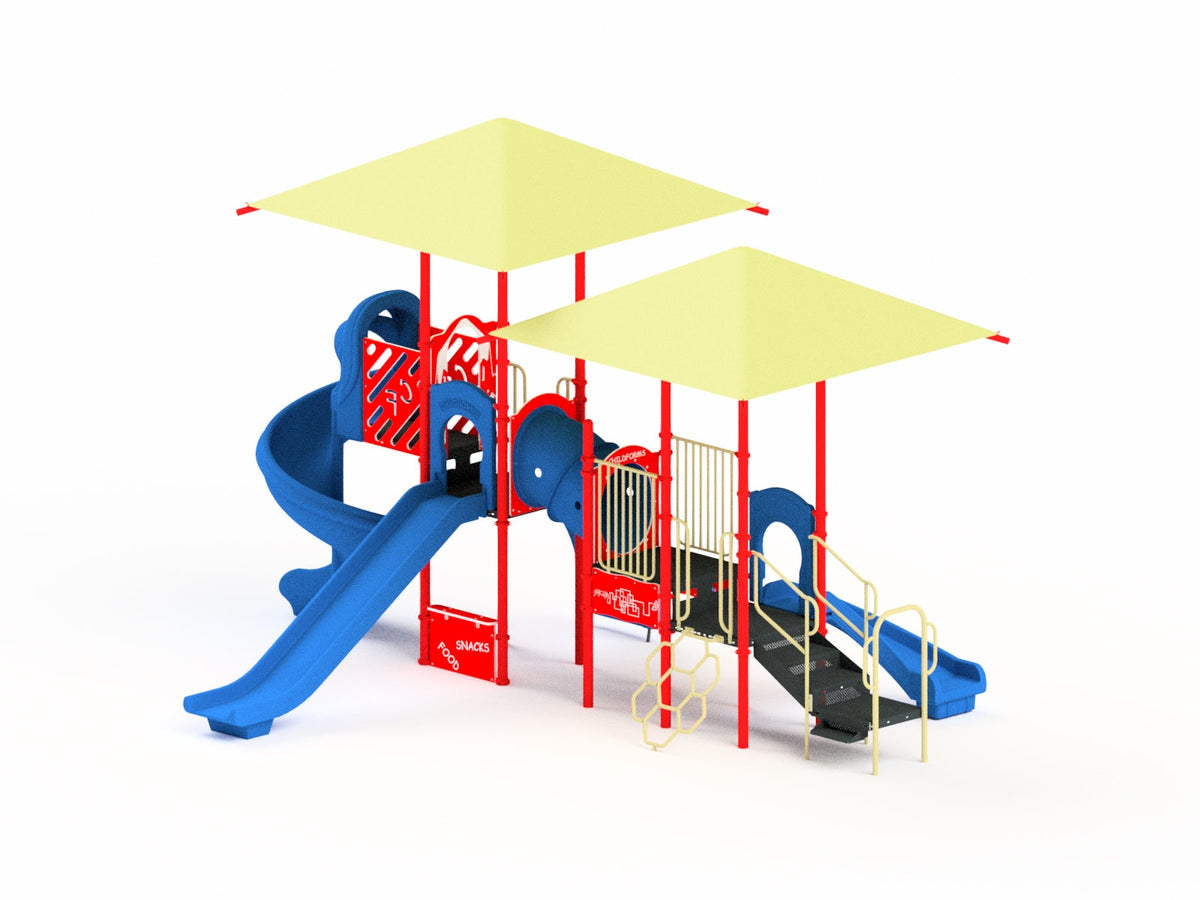
Playground Grants for Nonprofits: Programs and How to Apply
Playground grants for nonprofits come from manufacturer matches, community-build programs, shade grants and local foundations. Here is how each works and what to have ready.
On this blog
Nonprofits can fund a playground with a mix of manufacturer matching programs, community-build programs, shade grants and local foundations. There is no single national playground grant for nonprofits, so most projects stack two or three sources. The first step is to get your 501(c)(3) paperwork, an itemized quote and a site plan in one folder, because every program below asks for some version of them.
Key facts
- GameTime's Community Champions Playground Grant is open to nonprofits, schools, youth organizations, community groups and parks. The 2026 application deadline is October 23, with orders by October 30.
- KABOOM! community-built playspaces are limited to the cities and metro areas on its eligible list. If your community is not listed, KABOOM! recommends not applying yet.
- The American Academy of Dermatology shade structure grant gives up to $8,000 to public schools and nonprofits for permanent shade over a playground.
- Most funders want proof of local match, a maintenance plan and a quote that includes freight, surfacing and installation.
Which playground grants can nonprofits apply for?
GameTime Community Champions Playground Grant
Nonprofits, schools, youth organizations, community groups and parks and recreation entities in the contiguous United States can apply. It is a matching purchase program: up to 100 percent on play systems over $75,000 list price, up to 80 percent from $25,000 to $75,000, and up to 65 percent on credit terms above $25,000. Outdoor fitness equipment can be matched up to $80,000. It funds that manufacturer's equipment only, freight and tax are extra, and it cannot be combined with other offers.
KABOOM! community-built playspaces
KABOOM! works with a community, one of its funding partners and the organization that needs the space. You start with the eligibility quiz on its application page, and KABOOM! reviews your eligibility after you apply. Playspace types include playgrounds for ages 2 to 5 and 5 to 12, nature exploration areas and multi-sport courts. Eligibility depends on where you are, so check the current list of cities and metro areas before you spend time on an application.
Shade structure grants
The American Academy of Dermatology funds permanent shade structures for public schools and nonprofits, up to $8,000, and you need a sun-safety program that has been running for at least a year before you apply. The 2026 window runs October 19 to December 18. Shade pairs well with a larger grant because it is a separate pot of money.
Community foundations and local funders
County and regional community foundations, local businesses, civic clubs and utility foundations are the most realistic gap funders. Awards are often a few thousand dollars, so they work best as the last piece of the budget after a larger grant or a fundraiser.
What do funders ask nonprofits for?
| Document | Why it matters |
|---|---|
| 501(c)(3) determination letter | Proves eligibility. Fiscal sponsors are not accepted by every program |
| Itemized quote | Equipment, freight, surfacing and installation on separate lines |
| Site plan with use zones | Shows the equipment fits and the accessible route is planned |
| Proof of local match | Committed funds, pledges or a fundraising plan |
| Maintenance plan | Who inspects the playground and how often |
| Evidence of need | Enrollment, attendance, program numbers or a community survey |
How do nonprofits cover the rest of the budget?
Grants rarely pay for the whole project. Build the full number first, then layer sources. The 2026 Playground Equipment Price Index gives equipment prices, and how much a commercial playground costs covers surfacing, installation and freight. For fundraising ideas that sit alongside a grant, read raise money for a playground.
Where to go next
Churches have their own guide on grants and funding for church playgrounds, schools should start with grants for playground equipment for schools, and towns and park departments can use playground grants for small towns and parks. For every other project type, see the playground grants guide. When you are ready for the itemized number an application needs, request a quote.
Frequently asked questions
What grants can a nonprofit get for playground equipment?
Nonprofits can apply for manufacturer matching programs such as GameTime's Community Champions grant, KABOOM! community-built playspaces if their city is on the eligible list, shade grants and local foundation grants. Most projects combine more than one source.
Do you need 501(c)(3) status to apply?
Most programs ask for it. Some also accept schools, parks departments and community groups, and a few do not accept fiscal sponsors, so read the eligibility rules before you apply.
Can a nonprofit get a playground grant for a daycare or after-school program?
Youth organizations and nonprofits are eligible for GameTime's program, and a nonprofit that runs child care or after-school programming can apply as the applicant. Confirm eligibility with each funder before you build the budget.
Do grants cover surfacing and installation?
It depends on the program. Some manufacturer programs match equipment only, with freight and tax extra, so budget surfacing, border, installation and shade separately.
How much local match do you need?
It varies by program. Matching programs set the share they will cover, and the rest has to come from your organization, so have pledges or committed funds ready before you apply.
How early should a nonprofit start a grant application?
Start months ahead. Deadlines drive the schedule, and every application needs an itemized quote, a site plan and proof of match. Get the quote first.
Ask AI about this post
Pick an angle, then open it in the assistant you already use. The post link goes with it.
 ChatGPT
 Claude
 Perplexity
 Google AI Mode
 Grok
Opens in a new tab with the question and this post's link filled in. You may need to be signed in to the assistant.
- CPSC Public Playground Safety Handbook, Publication 325
- United States Access Board, guide to the play areas requirements
- ASTM F1487, safety performance specification for playground equipment
- IPEMA product certification register
Cost figures are PlayGrove planning estimates based on current manufacturer pricing and installed project costs in the United States. They are budgeting ranges, not quotes. Standards are revised periodically, so check the current revision before specifying.
More from the blog
 Oct 22, 2026
How to Raise Money for a Playground: Fundraising That Works
A practical plan for funding a playground through PTA events, sponsorships, community campaigns and matching gifts, with real equipment prices...
Read more → Oct 21, 2026
Playground Cost Per Square Foot: How to Calculate It
There is no single cost per square foot for a playground. Price the equipment, calculate the surfacing area, then divide...
Read more →Get a firm playground quote you can take to a board
Send the dimensions, the age ranges and the ZIP code. You get one firm all-in proposal covering equipment, freight, surfacing and installation, written to be read by people who were not in the meeting.
A quote costs nothing and commits you to nothing. If you are early and just need a credible number for a grant application, that is a perfectly good reason to ask.