How to Buy Playground Equipment Without Going Out to Bid
How schools, towns and parks departments buy playground equipment off Sourcewell and OMNIA Partners cooperative contracts and skip months of formal bidding.
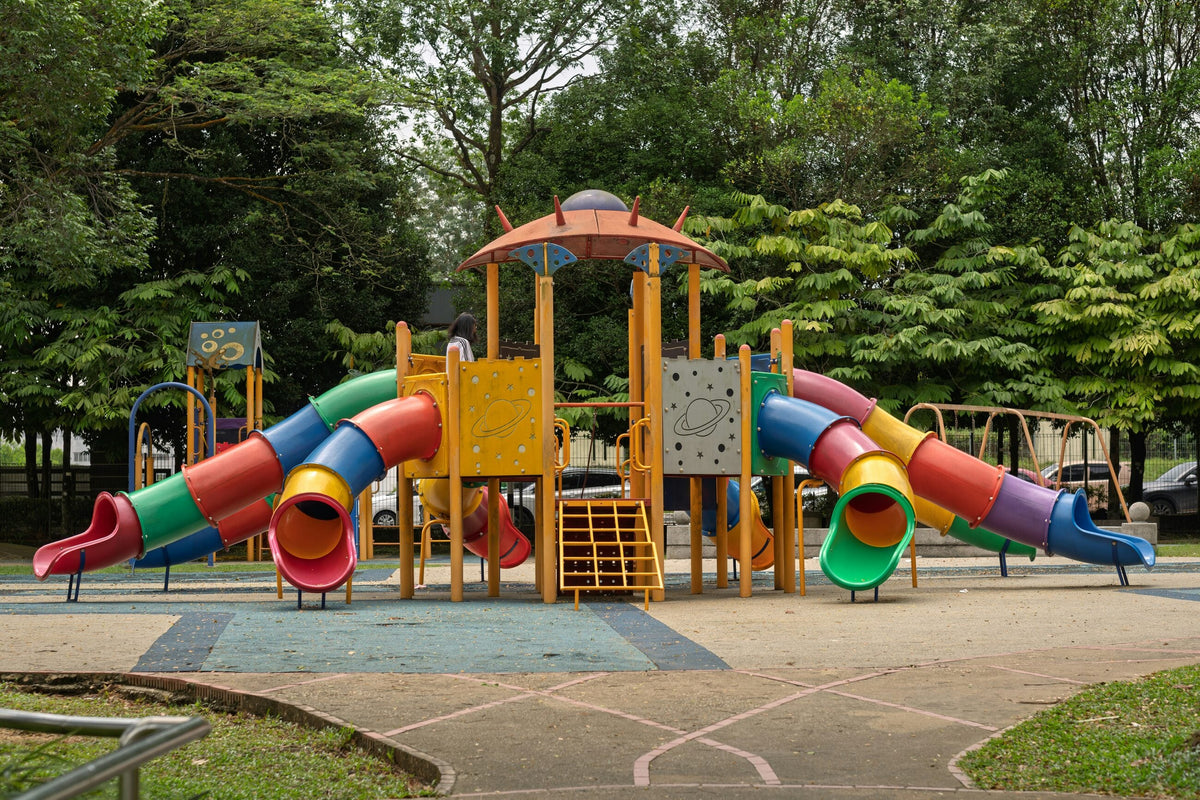
Public agencies can often buy playground equipment without running their own formal bid by purchasing off a cooperative contract, such as Sourcewell or OMNIA Partners, that was already competitively solicited. The competition still happens; somebody else ran it, documented it and published it. For a school district, town or parks department, that can take three to five months out of a playground project, and a surprising number of eligible agencies have never used it.
TL;DR
- A cooperative contract is a contract awarded through one public competitive solicitation that other eligible agencies can buy from without running their own bid.
- Registering with Sourcewell or OMNIA Partners is free, with no obligation to buy, and many agencies are already members without knowing it.
- A formal playground RFP typically takes 3 to 5 months before an order can be placed. Buying off a cooperative contract usually takes 1 to 2 weeks.
- Tell your supplier which cooperatives you are registered with before you ask for a quote, so they can confirm which contracts cover the equipment you want.
- Your agency is still responsible for confirming that state law and local policy allow cooperative purchasing. Both cooperatives say so plainly.

What is cooperative purchasing?
Cooperative purchasing is a procurement method where one public entity runs a competitive solicitation and awards a contract that other eligible agencies can then buy from directly.
A cooperative or a lead agency publishes the RFP, evaluates responses and awards contracts to the winning suppliers. Because that competitive process has already been run and documented, a member agency buying off the contract can usually satisfy its own competitive procurement requirement without repeating it. You are not skipping competition. You are using competition someone else ran properly and put on the public record.
Can you buy playground equipment without bidding?
Yes, if your organization is eligible for a cooperative and your state law and local procurement policy allow cooperative purchasing, which most do.
Two checks before you rely on it. First, whether your agency is already registered, because many are. Second, whether your own rules permit it. Procurement law varies by state and sometimes by town charter. Massachusetts municipalities, for example, work under the Uniform Procurement Act (Chapter 30B), and many Connecticut towns set their own bid rules by ordinance. Your procurement officer or finance director will know the answer in one email.
How do Sourcewell and OMNIA Partners work?
Both run a public competitive solicitation once, award national contracts, and let eligible agencies register for free and buy off those contracts without a separate bid.
Sourcewell
Sourcewell is a unit of local government under Minnesota statute. Its analysts write the RFP, publish public notice, hold a pre-proposal conference, open proposals publicly and score them against published criteria, as described in its solicitation process. Sourcewell reports more than 50,000 participating government, education and nonprofit organizations, and says there is no cost to register and no obligation to use a contract.
OMNIA Partners
OMNIA Partners works through lead public agencies, such as a state, city, county, university or school district. The lead agency runs the RFP, negotiates and awards a master agreement written so other agencies nationwide can use it. OMNIA says its public sector agreements are available to public agencies, educational institutions and nonprofits, and registration is free.
BuyBoard, TIPS and others
Other cooperatives exist, including BuyBoard and TIPS, which are widely used by school districts in Texas and elsewhere. Tell us which cooperatives your agency is registered with and we will tell you straight what we can and cannot supply through them.
Who can use a cooperative contract?
Public agencies of almost every kind can use cooperative contracts, and some cooperatives also accept nonprofits.
- School districts, charter schools and individual public schools
- Cities, towns, counties and their parks and recreation departments
- State agencies and higher education
- Special districts, housing authorities and similar public bodies
- Many nonprofits, depending on the cooperative and the registration review
Schools and parks departments are the most common users in our category. Our school playground equipment and park playground equipment pages show how each typically scopes and pays for a project.

How long does a playground bid take compared with a cooperative contract?
A formal playground RFP typically takes 3 to 5 months from first draft to purchase order, while ordering off a cooperative contract usually takes 1 to 2 weeks.
| Stage | Formal RFP | Cooperative contract |
|---|---|---|
| Write the specification | 3 to 6 weeks | Not needed |
| Advertise and collect bids | 2 to 4 weeks | Not needed |
| Evaluate responses | 2 to 3 weeks | Not needed |
| Board approval and award | 2 to 4 weeks | Internal PO approval |
| Quote and purchase order | After award | Days |
| Typical time to order | 3 to 5 months | 1 to 2 weeks |
Manufacturing lead time sits on top of either route. Our quoted play structures run roughly 60 days from order, and smaller ready-to-ship items much less.
Worked example: a parks department with a summer deadline
A town parks department gets project approval in mid-January and wants the playground open by July. On the formal bid route, the order goes in around late April to mid-June. Add roughly 60 days of manufacturing and the structure lands between late June and August, before installation even starts, and the summer is gone. Off a cooperative contract, the order goes in by early February, equipment arrives in April, and installation fits the spring window. For a project tied to a grant deadline, that gap is often the difference between building this year and next.

What cooperative purchasing does not do
Cooperative purchasing removes the bid, but it does not remove your agency's own rules, your due diligence or your specification.
- It is not automatically the cheapest price. Contract pricing is competitively set, but a supplier can sometimes beat it on a specific configuration. Ask.
- It does not cover everything. A contract covers the products and categories awarded under it. Surfacing, installation or site work outside it may need separate procurement.
- It does not override local policy. If your board requires three quotes above a threshold, the cooperative route usually satisfies the intent but does not erase the rule. Confirm internally.
- It does not rewrite your specification. If your spec requires third-party IPEMA certification, say so up front. Our equipment is built to ASTM F1487 on the manufacturer's own attestation and does not carry IPEMA third-party certification, and we would rather you know that on day one.
- Federal money has its own rules. Grant-funded purchases must meet the procurement standards in 2 CFR 200.318 and the sections that follow. Keep the cooperative's documentation in the grant file.
- It is not a loophole. It is an established procurement method used by tens of thousands of public agencies. Treat it as normal, because it is.
How to buy playground equipment off a cooperative contract
Buying playground equipment off a cooperative contract takes five steps, and most agencies finish them in a week or two.
- Confirm registration. Search your agency name on the cooperative's site. If you are not registered, it is free and quick.
- Confirm local authority. One email to your procurement officer or finance director confirming cooperative purchasing is allowed.
- Choose the equipment. Anything covered by a contract your supplier holds. Our commercial playground equipment catalog shows published prices before you ask.
- Get a quote at contract pricing with the contract number printed on it. That number is what your finance office needs.
- Issue a purchase order against that contract number. See our purchase order terms.

How to make your finance department comfortable
Give your finance department three documents and the conversation usually ends there: the contract number, a copy of the cooperative's award documentation, and a one-line note on which statute or policy permits cooperative purchasing in your jurisdiction.
Most procurement officers already know all of this. It is department heads, principals and parks directors who have usually never been told it exists. If tax exemption applies, send the certificate once through our tax exemption page and it is applied to every order.
What if your organization is not eligible?
If you cannot use a cooperative, buy direct; you are not at a disadvantage, and you should still expect published pricing rather than a quote-only process.
Private schools, churches and HOAs are often outside public cooperatives, although some nonprofits qualify through OMNIA Partners or Sourcewell, so check rather than assume. Either way, we publish prices on the site so buyers who cannot use a cooperative are not left guessing. If grant money is part of the plan, our playground grants guide covers where it usually comes from.
Frequently asked questions
Can a school district buy playground equipment without going out to bid?
Often, yes. If the district is eligible for a cooperative such as Sourcewell or OMNIA Partners, and state law and local policy allow cooperative purchasing, it can buy off a contract that was already competitively solicited instead of running its own RFP. The district still needs to confirm that authority with its business office or legal counsel before issuing the purchase order.
Is Sourcewell free to join?
Yes. Sourcewell states there is no cost to register and no obligation to use any of its contracts. Sourcewell is a unit of local government under Minnesota law, and its participants include government, education and nonprofit organizations. Registration takes minutes, and many agencies find they are already members and have simply never bought anything through it.
What is the difference between Sourcewell and OMNIA Partners?
Sourcewell runs its own competitive solicitations as a Minnesota government agency and awards national contracts directly. OMNIA Partners works through lead public agencies, such as a city, county or school district, which run the solicitation and award a master agreement that other agencies can then use. Both are free to register with, and both publish their solicitation and award documents.
Does a cooperative contract satisfy competitive bidding requirements?
In most states it can, because the competitive solicitation was already run and documented by the cooperative or its lead agency. Neither Sourcewell nor OMNIA Partners guarantees it meets your rules, though. Your agency is responsible for confirming that state statute and local policy permit it, so check with your procurement officer or counsel first.
Can churches, private schools or HOAs use cooperative purchasing?
Sometimes. OMNIA Partners says its public sector agreements are available to public agencies, educational institutions and nonprofits, and Sourcewell lists nonprofits among its participants, so a registered nonprofit may qualify. Eligibility is confirmed at registration. If yours does not qualify, buy direct: we publish prices and accept purchase orders and tax-exempt certificates.
Can you use federal grant money to buy off a cooperative contract?
Usually, but the purchase still has to meet the federal procurement standards in 2 CFR 200. Section 200.318(e) encourages intergovernmental agreements for common goods, yet the underlying solicitation must still satisfy the federal rules. Ask the cooperative for its federal compliance documentation and keep it in the grant file before you buy.
Tell us which cooperative you belong to
Read how cooperative purchasing works with us, then send us the site and tell us which cooperatives your agency is registered with. We will confirm which contracts cover the equipment you want and send an itemized quote inside 24 hours.
- CPSC Public Playground Safety Handbook, Publication 325
- United States Access Board, guide to the play areas requirements
- ASTM F1487, safety performance specification for playground equipment
- Sourcewell cooperative purchasing
- OMNIA Partners public sector
- IPEMA product certification register
Cost figures are PlayGrove planning estimates based on current manufacturer pricing and installed project costs in the United States. They are budgeting ranges, not quotes. Standards are revised periodically, so check the current revision before specifying.
Turn this into a number you can take to a board
Send the dimensions, the age ranges and the ZIP code. You get one firm all-in proposal covering equipment, freight, surfacing and installation, written to be read by people who were not in the meeting.
A quote costs nothing and commits you to nothing. If you are early and just need a credible number for a grant application, that is a perfectly good reason to ask.